




What is the influence of temperature on the mixing process in a Two Dimensional Mixer?
 Oct 09, 2026|
 As a supplier of Two Dimensional Mixers, I've witnessed firsthand the critical role that temperature plays in the mixing process. In this blog, we'll explore the influence of temperature on the mixing process in a Two Dimensional Mixer, delving into the scientific principles and practical implications.
The Basics of a Two Dimensional Mixer
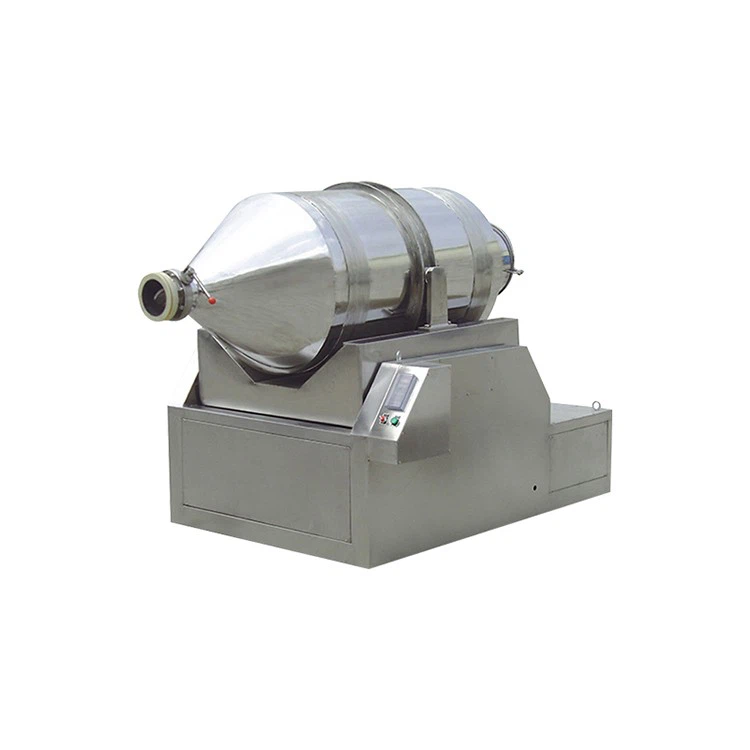
A Two Dimensional Mixer is a versatile piece of equipment widely used in industries such as pharmaceuticals, food processing, and chemical manufacturing. It operates on a combination of two types of motion: rotation and swinging. The rotation of the mixing chamber ensures that the materials are constantly in motion, while the swinging motion adds an additional degree of agitation, promoting a more thorough mixing of the ingredients.

The Impact of Temperature on the Physical Properties of Materials
Temperature can significantly affect the physical properties of the materials being mixed, which in turn influences the mixing process. Here are some key aspects to consider:
Viscosity
Viscosity is a measure of a fluid's resistance to flow. As temperature increases, the viscosity of most fluids decreases. This is because higher temperatures provide more energy to the molecules, allowing them to move more freely and reducing the internal friction within the fluid. In the context of a Two Dimensional Mixer, a lower viscosity means that the materials are more likely to flow and mix easily. For example, in the food industry, when mixing chocolate and other ingredients, heating the mixture can reduce the viscosity of the chocolate, making it easier to blend with other components evenly.
Density
Density is another physical property affected by temperature. Generally, as the temperature rises, the density of a substance decreases. This change in density can have a significant impact on the mixing process. In a Two Dimensional Mixer, materials with different densities may tend to separate if not mixed properly. When the temperature changes, the density difference between the materials can also change, potentially affecting the homogeneity of the final mixture. For instance, in a pharmaceutical formulation, if the temperature is not controlled during mixing, the density variations of the active ingredients and excipients may lead to uneven distribution of the drug in the final product.
Solubility
Temperature can also influence the solubility of substances. In many cases, an increase in temperature enhances the solubility of solids in liquids. This is because higher temperatures provide more energy for the dissolution process, allowing the solute particles to break away from the solid lattice and disperse in the solvent more easily. In a Two Dimensional Mixer, improved solubility can lead to a more uniform mixture. For example, in the production of liquid detergents, heating the mixture can increase the solubility of various additives, ensuring that they are evenly distributed throughout the product.
The Influence of Temperature on the Mixing Mechanism
In addition to affecting the physical properties of materials, temperature can also influence the mixing mechanism itself in a Two Dimensional Mixer.
Diffusion
Diffusion is the process by which molecules move from an area of higher concentration to an area of lower concentration. Temperature plays a crucial role in diffusion. As the temperature increases, the kinetic energy of the molecules also increases, leading to faster diffusion rates. In a Two Dimensional Mixer, faster diffusion means that the materials can mix more quickly and thoroughly. For example, when mixing two different powders, a higher temperature can accelerate the diffusion of the powder particles, reducing the mixing time required to achieve a homogeneous mixture.
Convection
Convection is the transfer of heat and mass through the movement of a fluid. In a Two Dimensional Mixer, the rotation and swinging motion of the mixing chamber can create convection currents within the materials. Temperature differences within the mixture can enhance these convection currents, promoting better mixing. For instance, if one part of the mixture is heated more than the other, the resulting density differences will cause the fluid to circulate, carrying the materials and facilitating their mixing.
Practical Considerations for Controlling Temperature in a Two Dimensional Mixer
Given the significant influence of temperature on the mixing process, it is essential to control the temperature effectively in a Two Dimensional Mixer. Here are some practical considerations:
Pre - Heating or Cooling of Materials
Before loading the materials into the mixer, they can be pre - heated or cooled to the desired temperature. This ensures that the mixing process starts under optimal conditions. For example, in the production of heat - sensitive polymers, the materials may need to be cooled to prevent degradation during mixing. On the other hand, in the case of wax - based products, pre - heating the wax can make it easier to mix with other ingredients.
Temperature Monitoring and Control Systems
Modern Two Dimensional Mixers are often equipped with temperature monitoring and control systems. These systems can continuously measure the temperature inside the mixing chamber and adjust the heating or cooling as needed. For example, a thermocouple can be used to measure the temperature, and a heating or cooling jacket around the mixing chamber can be used to maintain the desired temperature.
Comparison with Other Mixers
It's interesting to compare the influence of temperature on a Two Dimensional Mixer with other types of mixers, such as the One Dimensional Mixer and the Automatic Lifting Hopper Mixer.
A One Dimensional Mixer typically operates on a single axis of rotation. The mixing mechanism is relatively simple compared to a Two Dimensional Mixer. Temperature can still affect the physical properties of materials in a One Dimensional Mixer, but the more limited range of motion may make it more challenging to achieve a homogeneous mixture under the influence of temperature changes. For example, if the viscosity of the materials changes significantly due to temperature, the single - axis rotation may not be sufficient to disperse the materials evenly.
An Automatic Lifting Hopper Mixer uses a lifting and mixing mechanism. While temperature can also impact the mixing process in this type of mixer, the focus of this mixer is often on the convenience of loading and unloading materials. The influence of temperature on the mixing mechanism may be less pronounced compared to a Two Dimensional Mixer, as the main mixing action is based on the lifting and tumbling of the hopper.
Conclusion and Call to Action
In conclusion, temperature has a profound influence on the mixing process in a Two Dimensional Mixer. It affects the physical properties of materials, the mixing mechanism, and ultimately the quality of the final product. As a supplier of Two Dimensional Mixers, we understand the importance of temperature control and offer mixers with advanced temperature monitoring and control systems to ensure optimal mixing results.
If you're in the market for a high - quality Two Dimensional Mixer or have any questions about the influence of temperature on the mixing process, we'd love to hear from you. Contact us to start a discussion about your specific needs and how our mixers can meet them.
References
- Smith, J. (2018). "The Science of Mixing in Industrial Processes". Industrial Mixing Journal, 25(3), 45 - 56.
- Johnson, A. (2019). "Temperature Effects on Material Properties in Mixing Operations". Chemical Engineering Review, 32(2), 67 - 78.
- Brown, C. (2020). "Comparison of Different Mixer Types in Pharmaceutical Manufacturing". Pharmaceutical Technology, 45(4), 89 - 98.