




What materials can a Two Dimensional Mixer handle?
 Dec 24, 2025|
 As a supplier of Two Dimensional Mixers, I am often asked about the types of materials these versatile machines can handle. In this blog post, I'll delve into the diverse range of materials that a Two Dimensional Mixer can effectively process, highlighting its capabilities and advantages in various industries.
Understanding the Two Dimensional Mixer
Before we explore the materials, let's briefly understand what a Two Dimensional Mixer is. Unlike the One Dimensional Mixer, which has a single-axis rotation, a Two Dimensional Mixer moves in two directions - typically a combination of horizontal and vertical movements. This unique motion allows for a more thorough and efficient mixing process, making it suitable for a wide variety of materials. You can learn more about our Two Dimensional Mixer on our website.
Powders and Granules
One of the most common applications of a Two Dimensional Mixer is in the mixing of powders and granules. These materials are widely used in industries such as pharmaceuticals, food, and chemicals.
Pharmaceutical Powders
In the pharmaceutical industry, precise mixing of powders is crucial to ensure the uniformity of active ingredients in medications. A Two Dimensional Mixer can handle a wide range of pharmaceutical powders, including APIs (Active Pharmaceutical Ingredients), excipients, and fillers. The gentle mixing action of the mixer helps prevent the degradation of sensitive ingredients while achieving a high degree of homogeneity. For example, when mixing different types of powders to create a tablet formulation, the Two Dimensional Mixer can ensure that each tablet contains the correct amount of each ingredient.
Food Powders
Food manufacturers also rely on Two Dimensional Mixers to blend various powders, such as spices, flavorings, and nutritional supplements. The mixer can handle both fine and coarse powders, ensuring a consistent flavor and texture in the final product. For instance, in the production of instant coffee, the mixer can blend the coffee powder with other ingredients like creamer and sugar to create a uniform mixture.
Chemical Granules
In the chemical industry, Two Dimensional Mixers are used to mix granules of different sizes and densities. This is important for applications such as the production of fertilizers, plastics, and pigments. The mixer's ability to handle a wide range of materials makes it suitable for both small-scale and large-scale chemical manufacturing processes.
Liquids and Pastes
In addition to powders and granules, a Two Dimensional Mixer can also handle liquids and pastes.
Liquid-Liquid Mixing
When it comes to liquid-liquid mixing, the Two Dimensional Mixer can be used to blend different types of liquids, such as solvents, emulsions, and suspensions. The mixer's gentle agitation helps prevent the formation of air bubbles and ensures a homogeneous mixture. For example, in the production of paints and coatings, the mixer can blend different types of resins, pigments, and solvents to create a uniform product.
Liquid-Paste Mixing
The Two Dimensional Mixer is also capable of mixing liquids with pastes. This is useful in industries such as cosmetics, where the mixer can blend liquid ingredients like oils and water with pastes like creams and lotions. The mixer's ability to handle different viscosities makes it suitable for a wide range of cosmetic formulations.
Fibers and Flakes
Another area where Two Dimensional Mixers excel is in the mixing of fibers and flakes.
Fibrous Materials
Fibrous materials, such as glass fibers, carbon fibers, and natural fibers, are commonly used in industries such as composites, textiles, and insulation. A Two Dimensional Mixer can handle these fibrous materials without causing excessive breakage or damage. The mixer's gentle mixing action helps distribute the fibers evenly throughout the mixture, resulting in a stronger and more uniform composite material.
Flake Materials
Flake materials, such as mica flakes, graphite flakes, and metal flakes, are often used in applications such as paints, plastics, and electronics. The Two Dimensional Mixer can handle these flake materials, ensuring a uniform distribution in the final product. For example, in the production of metallic paints, the mixer can blend the metal flakes with the paint base to create a shiny and reflective finish.
Other Materials
In addition to the materials mentioned above, a Two Dimensional Mixer can also handle other types of materials, such as seeds, nuts, and small parts.
Seeds and Nuts
In the agricultural and food industries, Two Dimensional Mixers are used to mix seeds and nuts. This is important for applications such as the production of bird feed, animal feed, and snack foods. The mixer can handle different sizes and shapes of seeds and nuts, ensuring a uniform mixture.
Small Parts
In the manufacturing industry, Two Dimensional Mixers can be used to mix small parts, such as screws, bolts, and washers. The mixer's gentle mixing action helps prevent damage to the parts while ensuring a uniform distribution. This is useful in applications such as the assembly of electronic devices and machinery.
Advantages of Using a Two Dimensional Mixer
There are several advantages to using a Two Dimensional Mixer for handling different materials:
Efficient Mixing
The Two Dimensional Mixer's unique motion allows for a more efficient mixing process compared to other types of mixers. The combination of horizontal and vertical movements ensures that the materials are thoroughly mixed in a shorter period of time.
Gentle Mixing Action
The gentle mixing action of the Two Dimensional Mixer helps prevent the degradation of sensitive materials and reduces the risk of damage to fragile components. This is particularly important for applications where the quality of the materials is crucial.
Versatility
As we have seen, a Two Dimensional Mixer can handle a wide range of materials, including powders, granules, liquids, pastes, fibers, flakes, seeds, nuts, and small parts. This versatility makes it a valuable asset for industries that require the mixing of different types of materials.
Easy to Clean
The design of the Two Dimensional Mixer makes it easy to clean, which is important for industries that require strict hygiene standards, such as the food and pharmaceutical industries. The mixer can be easily disassembled and cleaned, ensuring that there is no cross-contamination between different batches of materials.
Conclusion
In conclusion, a Two Dimensional Mixer is a versatile and efficient mixing solution that can handle a wide range of materials. Whether you are in the pharmaceutical, food, chemical, or manufacturing industry, the Two Dimensional Mixer can help you achieve a high degree of homogeneity in your products. If you are interested in learning more about our Two Dimensional Mixers or would like to discuss your specific mixing requirements, please feel free to contact us. We are committed to providing our customers with the best mixing solutions and excellent customer service.
If you are looking for a reliable and efficient mixing solution for your business, consider our Two Dimensional Mixer. Our team of experts can help you choose the right mixer for your specific needs and provide you with all the support you need to get the most out of your investment.
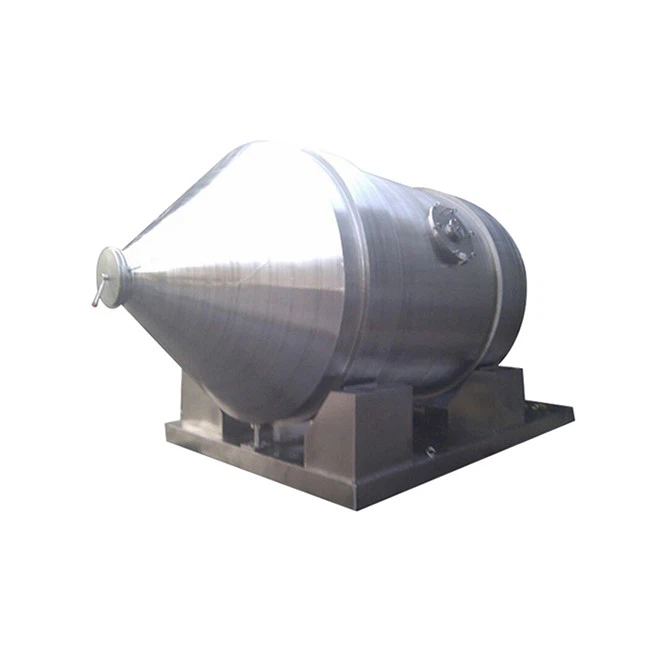

We also offer other types of mixing equipment, such as the One Dimensional Mixer and the Automatic Lifting Hopper Mixer. These mixers are designed to meet different mixing requirements and can be customized to suit your specific needs.
Contact us today to learn more about our products and services and to discuss your mixing requirements. We look forward to working with you!
References
- "Mixing Technology Handbook" by Paul E. Slatter
- "Pharmaceutical Dosage Forms: Tablets" by Herbert A. Lieberman, Leon Lachman, and Joseph B. Schwartz
- "Food Process Engineering and Technology" by Gustavo V. Barbosa-Cánovas, Julio M. Aguilera, and Enrique Palou