




What is the power consumption of a Lifting Hopper Mixer?
 Sep 08, 2025|
 Hey there! As a supplier of Lifting Hopper Mixers, I often get asked about the power consumption of these nifty machines. So, I thought I'd sit down and write a blog post to break it all down for you.
First off, let's talk about what a Lifting Hopper Mixer is. It's a piece of equipment that's used to mix different materials together. You can find it in a bunch of industries, like food processing, pharmaceuticals, and chemical manufacturing. The way it works is pretty simple. The hopper, which is like a big container, is filled with the materials you want to mix. Then, it gets lifted up and rotated to blend everything evenly.
Now, onto the main question: what's the power consumption of a Lifting Hopper Mixer? Well, it's not a one - size - fits - all answer. There are several factors that can affect how much power these mixers use.
One of the biggest factors is the size of the mixer. Larger mixers generally need more power to operate. Think about it - if you've got a huge hopper filled with heavy materials, it's going to take more energy to lift it up and spin it around compared to a smaller one. For example, a small - scale Laboratory Hopper Mixer used in a research lab might have a relatively low power consumption. It's designed to handle smaller batches, so it doesn't need as much juice. On the other hand, an industrial - sized Lifting Hopper Mixer that's used in a big factory to mix tons of materials every day will require a lot more power.
The type of materials being mixed also plays a role. If you're mixing lightweight, powdery substances, the mixer won't have to work as hard as it would if you were mixing thick, viscous materials. Powders are easier to move around, so less energy is needed to get them blended. But when you're dealing with something like thick pastes or sticky substances, the mixer has to put in more effort to break up clumps and ensure a uniform mixture. This means it'll draw more power.
Another factor is the speed and duration of operation. If you run the mixer at a high speed for a long time, it's going to use more power than if you run it at a slower speed for a shorter period. Some mixers come with adjustable speed settings, which is really handy. You can choose the right speed depending on the materials you're mixing. For instance, if you're just doing a quick mix of some light powders, you can set the mixer to a lower speed and save on power.
Let's take a look at some rough estimates. A small Laboratory Single Arm Mixer, which is similar in concept to a Lifting Hopper Mixer but on a smaller scale, might consume anywhere from 0.5 to 2 kilowatts per hour. These are usually used for small - batch mixing in a laboratory environment.
For medium - sized Lifting Hopper Mixers that are used in small to medium - sized production facilities, the power consumption can range from 2 to 10 kilowatts per hour. These mixers are capable of handling larger volumes of materials compared to laboratory mixers.
Industrial - scale Lifting Hopper Mixers, which are used in big factories for high - volume production, can consume 10 kilowatts per hour or more. The exact amount depends on the specific design, size, and the nature of the materials being mixed.
It's also important to note that modern Lifting Hopper Mixers are designed to be more energy - efficient. Manufacturers are constantly working on improving the technology to reduce power consumption without sacrificing performance. For example, some mixers use advanced motor control systems that adjust the power output based on the load. This means the mixer only uses as much power as it actually needs at any given time.
If you're in the market for a Lifting Hopper Mixer, it's a good idea to consider the power consumption along with other factors like capacity, mixing efficiency, and price. You want to find a mixer that meets your production needs while also being cost - effective in terms of energy usage.

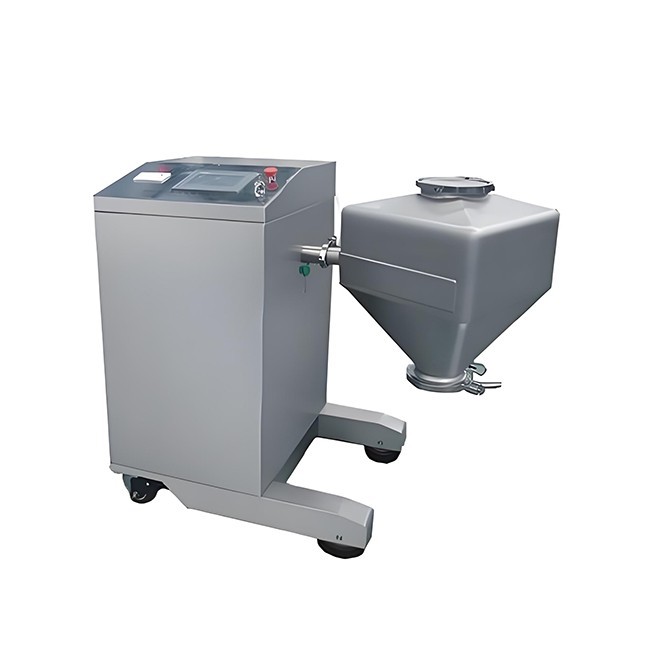
At our company, we offer a wide range of Lifting Hopper Mixers with different power ratings to suit various applications. Whether you're a small - scale producer or a large industrial manufacturer, we've got a solution for you.
If you're interested in learning more about our Lifting Hopper Mixers or want to discuss your specific requirements, don't hesitate to reach out. We're here to help you make the right choice for your business.
In conclusion, the power consumption of a Lifting Hopper Mixer can vary widely depending on size, the type of materials being mixed, speed, and duration of operation. By understanding these factors, you can make an informed decision when it comes to purchasing a mixer.
References
- General knowledge of industrial mixing equipment and power consumption principles.
- Industry reports on the development of energy - efficient mixing technologies.