




What is the effect of particle shape on fluidization in a fluidizing dryer?
 Dec 29, 2025|
 Hey there! As a supplier of fluidizing dryers, I've seen firsthand the ins and outs of how these machines work. One aspect that often gets overlooked but has a huge impact on fluidization is the particle shape. In this blog post, I'm going to dive into the effects of particle shape on fluidization in a fluidizing dryer.
Understanding Fluidization
Before we get into particle shape, let's quickly go over what fluidization is. In a fluidizing dryer, we use a fluid (usually air) to suspend solid particles. It's like making a sort of "liquid - like" suspension out of solids. This process has a lot of benefits, such as better heat and mass transfer between the fluid and the particles, which helps in drying the particles more efficiently.
How Particle Shape Affects Fluidization
1. Spherical Particles
Spherical particles are considered the ideal shape for fluidization in many ways. They have a very uniform and smooth surface, which allows the fluid to flow around them easily. When we have a bed of spherical particles in a fluidizing dryer, the fluid can enter and exit the spaces between the particles without much resistance. This results in a more consistent and stable fluidization process.
For example, in industries where we're drying tiny spherical beads, the fluidizing air can move through the bed evenly. The particles can be lifted and suspended uniformly, and the drying process can be quite predictable. We know exactly how the heat will be transferred to these spherical particles because the air flow patterns are relatively simple.
2. Non - Spherical Particles
Irregularly Shaped Particles
Irregularly shaped particles cause a lot more chaos in the fluidization process. These particles have rough and uneven surfaces, and their shape can vary widely. When the fluid tries to flow around them, it encounters a lot of obstacles. The air has to change direction frequently, which creates regions of high and low pressure within the particle bed.
Think of it like trying to walk through a forest full of randomly placed, odd - shaped rocks. It's much harder to move smoothly compared to walking on a flat, open path. In a fluidizing dryer with irregularly shaped particles, these disturbances in the fluid flow can lead to uneven fluidization. Some particles may be fluidized more easily than others, and there could be areas where the particles clump together.
Elongated or Fibrous Particles
Elongated or fibrous particles also pose unique challenges. These particles tend to align themselves with the fluid flow. When the fluid velocity is low, they may lay flat on the bottom of the fluidizing bed. As the fluid velocity increases, they start to lift, but they often form clusters or ropes because of their shape.
This clustering can cause problems in the dryer. For instance, the heat transfer to the inner part of these clusters can be poor, which means that the particles in the center may not dry properly. And when these clusters move through the dryer, they can disrupt the normal fluidization behavior of the surrounding particles.
Implications for the Drying Process
The effect of particle shape on fluidization has direct implications for the drying process in a fluidizing dryer.
- Drying Efficiency: As I mentioned earlier, spherical particles offer better fluidization, which means more efficient heat and mass transfer. This results in a shorter drying time. On the other hand, irregular and elongated particles can reduce the drying efficiency, leading to longer drying times and potentially higher energy consumption.
- Product Quality: Uneven fluidization caused by non - spherical particles can lead to inconsistent drying of the product. Some parts of the product may be over - dried, while others may be under - dried. This can affect the quality of the final product. For example, in the food industry, if a food product is not dried uniformly, it may spoil more quickly or have an inconsistent texture.
Our Solutions as a Fluidizing Dryer Supplier
At our company, we understand the challenges posed by different particle shapes. We've developed several strategies to deal with these issues.

- Adjusting the Fluidizing Velocity: By carefully controlling the velocity of the fluid (air) in the dryer, we can optimize the fluidization of non - spherical particles. For irregularly shaped particles, a slightly higher fluidizing velocity may be needed to break up the clumps and ensure more even fluidization.
- Using Specialized Distributors: We design our dryers with specialized distributors that can help to distribute the fluid more evenly across the particle bed. This is especially important for non - spherical particles, as it can reduce the impact of the irregularities in the particle shape on the fluid flow.
Other Drying Equipment Options
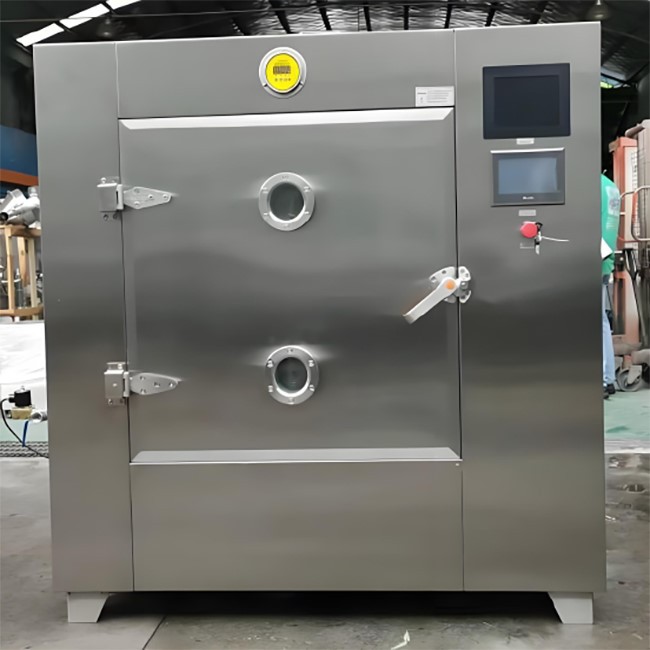
If you're dealing with particles that are particularly difficult to fluidize, we also offer other types of drying equipment. For example, the Box Type Microwave Vacuum Dryer uses microwave energy in a vacuum environment to dry materials. This can be a great option for heat - sensitive or hard - to - dry particles.
The Double Cone Rotary Vacuum Dryer is another alternative. It rotates the drying chamber, which helps to mix the particles and improve the drying process. And if you need a more traditional approach, the Vacuum Heating Oven can be a reliable choice for drying various materials.
Let's Talk!
If you're in the market for a fluidizing dryer or any of our other drying equipment, I'd love to have a chat with you. We can discuss your specific needs, the type of particles you're dealing with, and find the best solution for your drying process. Whether you have spherical particles that need a straightforward fluidization process or non - spherical particles that require a more customized approach, we're here to help. So, don't hesitate to reach out and start a conversation about your drying requirements.
References
- Kunii, D., & Levenspiel, O. (1991). Fluidization Engineering. Butterworth - Heinemann.
- Geldart, D. (1973). Types of gas fluidization. Powder Technology, 7(5), 285 - 292.