




How to improve the mixing efficiency of a Square Cone Mixer for powders with different densities?
 Dec 15, 2025|
Hey there! As a supplier of Square Cone Mixers, I've seen firsthand the challenges that come with mixing powders of different densities. It's a common headache in industries like pharmaceuticals, food, and chemicals. But don't worry, I'm here to share some tips on how to improve the mixing efficiency of your Square Cone Mixer.
Understanding the Basics of a Square Cone Mixer
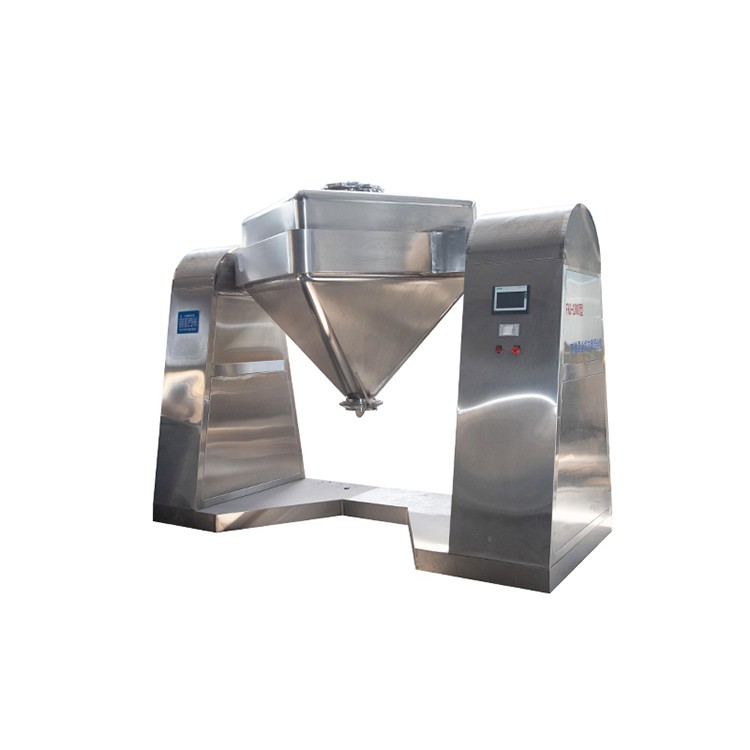
First off, let's quickly go over what a Square Cone Mixer is. It's a type of mixer that uses a unique square cone-shaped container. This design allows for a gentle yet thorough mixing process. The mixer rotates the container, causing the powders inside to tumble and blend together.
The key advantage of a Square Cone Mixer is its ability to handle powders with different physical properties, such as particle size and density. However, achieving optimal mixing efficiency can be tricky, especially when dealing with powders that have significant density differences.
Factors Affecting Mixing Efficiency
Before we dive into the solutions, let's understand the factors that can affect the mixing efficiency of a Square Cone Mixer:
- Density Difference: Powders with large density differences tend to segregate during mixing. Heavier particles may settle at the bottom, while lighter ones float to the top.
- Particle Size: Variations in particle size can also lead to segregation. Smaller particles may sift through the larger ones, creating an uneven mixture.
- Filling Ratio: The amount of powder loaded into the mixer can impact mixing efficiency. Overfilling can reduce the available space for particles to move and blend, while underfilling may not provide enough agitation.
- Mixing Time: Insufficient mixing time can result in an incomplete blend, while excessive mixing can cause further segregation or damage to the particles.
- Mixing Speed: The rotational speed of the mixer affects the intensity of the mixing action. Too slow, and the powders may not blend properly; too fast, and it can cause segregation.
Tips to Improve Mixing Efficiency
Now that we know the factors at play, let's look at some practical tips to improve the mixing efficiency of a Square Cone Mixer:
1. Pre - Blending
One effective way to deal with powders of different densities is to pre - blend them before loading them into the Square Cone Mixer. You can use a simpler mixer, like a Laboratory Single Arm Mixer, to create a more homogenous starting mixture. This reduces the density difference and makes it easier for the Square Cone Mixer to achieve a uniform blend.
2. Adjust the Filling Ratio
Find the optimal filling ratio for your mixer. Generally, a filling ratio of 30% - 70% is recommended. This allows enough space for the powders to move freely and interact during mixing. You may need to experiment with different filling levels to find the sweet spot for your specific powders.

3. Control the Mixing Time
Determine the appropriate mixing time based on the properties of your powders. Start with a conservative estimate and then test the mixture at regular intervals. Use analytical methods, such as sampling and testing for uniformity, to ensure that the desired level of mixing is achieved. Avoid over - mixing, as it can lead to segregation and other issues.
4. Optimize the Mixing Speed
The mixing speed should be adjusted according to the density and particle size of the powders. For powders with large density differences, a slower speed may be more effective in preventing segregation. On the other hand, powders with similar densities can be mixed at a higher speed for a more intense blending action.
5. Use Additives
In some cases, adding anti - segregation agents or lubricants can help improve the mixing efficiency. These additives can reduce the tendency of powders to segregate by altering their surface properties. However, make sure to choose additives that are compatible with your powders and the end - use application.
6. Employ Multiple Mixing Cycles
If you're still having trouble achieving a uniform mixture, consider using multiple mixing cycles. After the first mixing cycle, stop the mixer, break up any clumps, and then resume mixing. This can help to further disperse the powders and improve the overall blend.
Additional Considerations
Apart from the above tips, here are some other things to keep in mind:
- Cleaning and Maintenance: Regularly clean your Square Cone Mixer to prevent the buildup of powders and contaminants. Proper maintenance, such as checking the bearings and drive system, ensures that the mixer operates at its best.
- Operator Training: Make sure your operators are well - trained on the proper use of the Square Cone Mixer. They should understand the importance of following the recommended procedures and be able to troubleshoot common issues.
Conclusion
Improving the mixing efficiency of a Square Cone Mixer for powders with different densities requires a combination of proper techniques, equipment setup, and attention to detail. By understanding the factors that affect mixing and implementing the tips outlined above, you can achieve a more uniform and high - quality blend.
If you're in the market for a Square Cone Mixer or need more advice on powder mixing, feel free to reach out. We also offer other types of mixers, such as the Automatic Lifting Hopper Mixer and the Laboratory Single Arm Mixer, which may be suitable for your specific needs. Contact us today to start a discussion about your mixing requirements!
References
- Perry, R. H., & Green, D. W. (Eds.). (2008). Perry's Chemical Engineers' Handbook. McGraw - Hill.
- Pietsch, W. (2002). Size Enlargement by Agglomeration. Wiley - VCH.