




Can mixing equipment be used for chemical reactions?
 Apr 10, 2026|
 You might be wondering, "Can mixing equipment be used for chemical reactions?" Well, I'm here to tell you that not only can it be used, but it's often a game - changer in the world of chemistry. As a mixing equipment supplier, I've seen firsthand how different types of mixing devices can play crucial roles in various chemical processes.
Let's first dig into the basic role of mixing equipment. At its core, mixing equipment is designed to combine two or more components thoroughly. When it comes to chemical reactions, achieving a homogeneous mixture is often essential for the reaction to proceed efficiently. If the reactants are not well - mixed, parts of the reaction mixture might not get enough contact with each other, leading to incomplete reactions, lower yields, and potential waste of valuable chemicals.
There are several types of mixing equipment, each with its own unique features and applications in chemical reactions.
Laboratory Three - dimensional Mixer
The Laboratory Three - dimensional Mixer is a nifty piece of gear. It offers a complex three - dimensional motion that can ensure excellent mixing in a relatively short period. In chemical reactions, especially those where the reactants have different physical properties like density or viscosity, a three - dimensional mixer can really shine.
For example, in the synthesis of some high - performance polymers, different monomers need to be mixed uniformly before the polymerization reaction begins. The Laboratory Three - dimensional Mixer can handle this task efficiently, as its multi - axis rotation and movement pattern can break down any agglomerates and disperse the monomers evenly. This uniform mixing helps in controlling the reaction kinetics, resulting in polymers with more consistent properties.
Trough Mixer
The Trough Mixer is another workhorse in the chemical industry. It consists of a trough - shaped container with one or more mixing blades. This type of mixer is great for large - scale chemical reactions where a large volume of reactants needs to be mixed.
In the production of fertilizers, for instance, a trough mixer can blend different chemical compounds such as nitrogen, phosphorus, and potassium sources. The continuous agitation by the blades helps in maintaining a uniform distribution of the elements throughout the mixture. This is crucial because an uneven mixture can lead to some areas of the fertilizer being too rich or too poor in certain nutrients, which can affect plant growth.
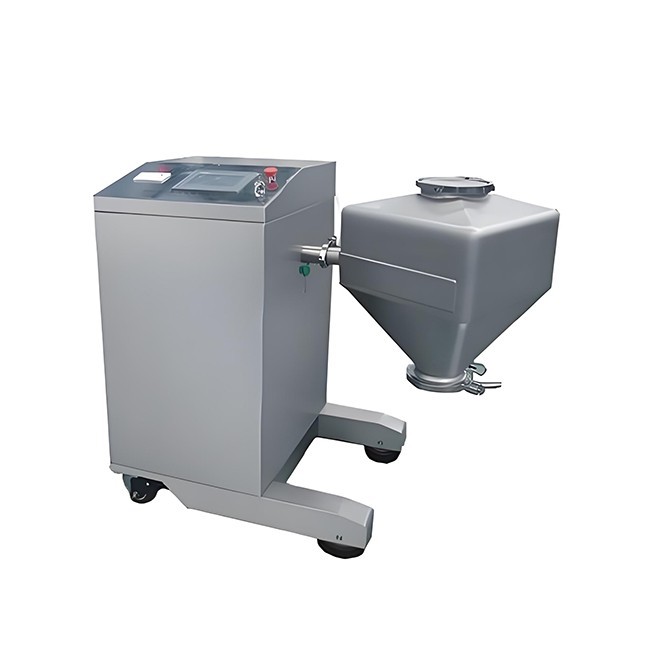
Laboratory Hopper Mixer
The Laboratory Hopper Mixer is ideal for small - scale chemical reactions, like in a research laboratory. It's convenient for mixing small amounts of powders or granular substances.
In the development of new pharmaceutical drugs, researchers often need to mix a variety of active ingredients and excipients in precise ratios. The Laboratory Hopper Mixer can make sure that each sample is well - mixed, allowing for accurate testing of the drug's properties and efficacy.
Now, let's talk about some of the key factors that make mixing equipment suitable for chemical reactions.
Mixing Intensity: This refers to how vigorously the mixer combines the reactants. In some exothermic reactions, a high mixing intensity might be required to dissipate the heat generated quickly and prevent local overheating, which could cause unwanted side reactions or even damage to the reaction vessel. On the other hand, for some gentle reactions, a lower mixing intensity is needed to avoid disrupting delicate chemical bonds.
Mixing Time: The length of time the mixer runs also matters. Some chemical reactions are very fast and only need a short mixing period to initiate and complete, while others are slow and require continuous, extended mixing to reach equilibrium.
Material Compatibility: The construction materials of the mixing equipment need to be compatible with the chemicals involved in the reaction. For example, if you're dealing with highly corrosive acids, the mixer should be made of materials like stainless steel or certain plastics that can resist corrosion.

Despite all the advantages, there are also some limitations to using mixing equipment for chemical reactions.
In some cases, the mixing equipment might introduce impurities. For example, if the mixer has not been cleaned properly between different batches, residues from previous reactions can contaminate the new reaction. Also, the mechanical forces generated by the mixer can sometimes cause physical changes to the reactants. For example, in some cases, high - speed agitation can break down large particles into smaller ones, which might affect the reaction mechanism.
However, these limitations can be managed with proper maintenance, cleaning procedures, and careful selection of mixing parameters.
So, to sum it all up, mixing equipment can definitely be used for chemical reactions, and in fact, it's an indispensable part of many chemical processes. Whether you're in a large - scale industrial plant or a small research lab, the right mixing equipment can improve the efficiency, quality, and reproducibility of your chemical reactions.
If you're in the market for mixing equipment, or you have specific requirements for chemical reactions, don't hesitate to reach out. We're here to help you find the perfect mixing solution for your needs. Let's start a conversation and explore how our mixing equipment can take your chemical processes to the next level.
References
- Smith, J. (2018). Chemical Reaction Engineering Principles. Publisher: ABC Press.
- Johnson, A. (2020). Mixing Technology in Industrial Chemistry. Publisher: XYZ Books.