




Can a trough mixer be used for mixing materials with different viscosities?
 Jan 08, 2026|
 As a trusted supplier of trough mixers, I often encounter inquiries from customers regarding the versatility of our equipment, particularly about its ability to handle materials with different viscosities. This blog post aims to provide a comprehensive analysis of whether a trough mixer can effectively mix materials with varying viscosities, exploring the technical aspects, practical considerations, and real - world applications.
Understanding Trough Mixers
Trough mixers are widely used in industries such as food, pharmaceuticals, chemicals, and cosmetics. They consist of a U - shaped trough and a mixing shaft equipped with paddles or blades. The mixing action is achieved by the rotation of the shaft, which moves the materials in a complex pattern within the trough. This design allows for efficient blending of dry powders, granules, and semi - solid materials.
Viscosity and Its Impact on Mixing
Viscosity is a measure of a fluid's resistance to flow. Materials with high viscosity, such as thick pastes or gels, flow slowly and require more energy to mix compared to low - viscosity materials like liquids or fine powders. When mixing materials with different viscosities, the challenge lies in achieving a homogeneous blend without leaving pockets of unmixed high - or low - viscosity substances.
Can a Trough Mixer Handle Different Viscosities?
The answer is yes, a trough mixer can be used to mix materials with different viscosities, but several factors need to be considered to ensure successful mixing:
1. Mixing Speed
The speed of the mixing shaft plays a crucial role in handling materials with different viscosities. For high - viscosity materials, a slower mixing speed may be required initially to prevent excessive stress on the mixer and to allow the materials to gradually incorporate. As the mixing progresses and the blend becomes more homogeneous, the speed can be increased to enhance the mixing efficiency.
2. Paddle Design
The design of the paddles or blades on the mixing shaft is another important factor. Specialized paddle designs, such as helical or double - helical paddles, can be more effective in handling materials with different viscosities. These paddle designs create a more complex flow pattern within the trough, ensuring that high - viscosity materials are pulled into the mixing action and evenly distributed throughout the blend.
3. Mixing Time
Mixing materials with different viscosities typically requires a longer mixing time compared to materials of similar viscosities. This allows the high - viscosity materials to break down and disperse evenly within the low - viscosity matrix. However, it is important to monitor the mixing process closely to avoid over - mixing, which can lead to product degradation or other quality issues.
4. Loading Capacity
The loading capacity of the trough mixer should be carefully considered when mixing materials with different viscosities. Overloading the mixer can result in poor mixing performance, as the high - viscosity materials may not be able to move freely within the trough. It is recommended to follow the manufacturer's guidelines regarding the maximum loading capacity for optimal mixing results.
Real - World Applications
Trough mixers have been successfully used in various industries to mix materials with different viscosities:
Food Industry
In the food industry, trough mixers are used to blend ingredients such as thick sauces, pastes, and dry spices. For example, when making a tomato sauce, the high - viscosity tomato paste needs to be mixed with low - viscosity liquids like water or vinegar, along with dry herbs and spices. A trough mixer can effectively combine these ingredients to create a homogeneous sauce.
Pharmaceutical Industry
Pharmaceutical manufacturers use trough mixers to mix active pharmaceutical ingredients (APIs) with excipients of different viscosities. APIs can be in the form of powders or granules, while excipients can range from low - viscosity lubricants to high - viscosity binders. A well - designed trough mixer can ensure uniform distribution of the API within the excipient matrix, which is crucial for the quality and efficacy of the final pharmaceutical product.
Chemical Industry
In the chemical industry, trough mixers are employed to mix polymers, resins, and additives with different viscosities. For instance, when producing a composite material, a high - viscosity polymer resin needs to be mixed with low - viscosity additives and fillers. A trough mixer can help achieve a consistent blend, improving the mechanical properties of the final product.
Comparison with Other Mixing Equipment
While trough mixers are capable of mixing materials with different viscosities, it is worth comparing them with other types of mixing equipment:
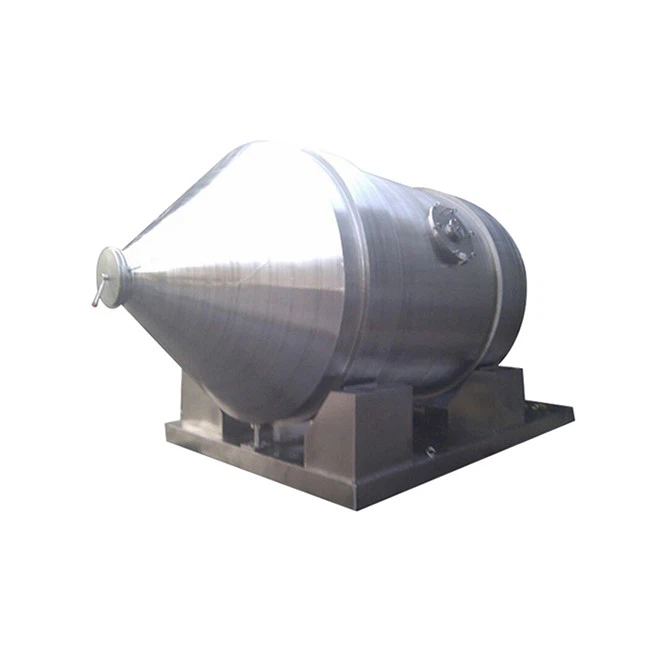

Laboratory Three - dimensional Mixer
A Laboratory Three - dimensional Mixer is designed to provide a more complex mixing motion, which can be beneficial for mixing materials with different viscosities in a laboratory setting. However, it may have a lower mixing capacity compared to a trough mixer and is more suitable for small - scale production or research purposes.
One Dimensional Mixer
A One Dimensional Mixer typically has a simpler mixing mechanism, which may not be as effective in handling materials with significantly different viscosities. Trough mixers, with their more complex paddle designs and mixing patterns, are generally better suited for this task.
V Type Blender
A V Type Blender is commonly used for mixing dry powders and granules. While it can achieve good mixing results for materials with similar viscosities, it may struggle to mix high - viscosity materials effectively. Trough mixers, on the other hand, can handle a wider range of viscosities due to their more versatile mixing action.
Conclusion
In conclusion, a trough mixer can be a reliable solution for mixing materials with different viscosities. By carefully considering factors such as mixing speed, paddle design, mixing time, and loading capacity, it is possible to achieve a homogeneous blend of materials with varying viscosities. Trough mixers have proven their effectiveness in various industries, offering a cost - effective and efficient mixing solution.
If you are in the market for a trough mixer or have any questions about mixing materials with different viscosities, please do not hesitate to contact us. Our team of experts is ready to assist you in selecting the right equipment for your specific needs and to provide you with professional advice on the mixing process.
References
- "Mixing Technology Handbook" by Paul E. Slatter
- "Food Mixing Technology" by Yanyun Zhao
- "Pharmaceutical Mixing and Granulation" by J. T. Carstensen