




How does a Vacuum Feeder Machine ensure uniform feeding?
 Mar 12, 2026|
 Hey there! As a supplier of Vacuum Feeder Machines, I often get asked how these nifty devices ensure uniform feeding. Well, let's dive right in and break it down.
First off, let's understand what a Vacuum Feeder Machine is all about. It's a piece of equipment that uses vacuum technology to transfer materials from one place to another, usually from a storage container to a processing machine. This is super handy in industries like food processing, pharmaceuticals, and chemical manufacturing, where accurate and uniform feeding of materials is crucial.
One of the key ways a Vacuum Feeder Machine ensures uniform feeding is through its vacuum system. The vacuum creates a pressure difference that sucks the material into the feeder. This suction is carefully controlled to ensure that the material is picked up at a consistent rate. The strength of the vacuum can be adjusted based on the type and properties of the material being fed. For example, if you're dealing with a light and fluffy powder, you might need a lower vacuum strength to prevent over - picking up the material. On the other hand, a denser material might require a stronger vacuum to ensure it gets properly transferred.
The design of the suction nozzle also plays a vital role. A well - designed nozzle is shaped in a way that it can evenly distribute the suction force across the surface of the material. This helps in picking up the material uniformly from the storage container. Some nozzles are adjustable, allowing you to change the suction pattern depending on the shape and size of the container. This flexibility ensures that no matter what kind of storage setup you have, the feeder can pick up the material evenly.
Another important aspect is the material flow control within the feeder. Once the material is sucked into the feeder, it needs to be transported to the processing machine in a uniform manner. Most Vacuum Feeder Machines have a conveying system, such as a screw conveyor or a pneumatic conveying line. These systems are designed to move the material at a constant speed.
In the case of a screw conveyor, the pitch and diameter of the screw are carefully calculated to ensure that the material is pushed forward at a consistent rate. The rotation speed of the screw can also be adjusted to control the flow rate of the material. This allows you to fine - tune the feeding process according to the requirements of your production line.
Pneumatic conveying lines use compressed air to move the material. The air pressure and flow rate are regulated to ensure that the material is carried along the line without any blockages or uneven distribution. By controlling these parameters, the feeder can maintain a uniform flow of material to the processing machine.
The feeder also has sensors and monitoring systems. These sensors can detect the level of material in the feeder, the flow rate, and the pressure within the system. If there are any deviations from the set parameters, the feeder can automatically adjust itself. For example, if the flow rate drops below a certain level, the feeder can increase the vacuum strength or the speed of the conveying system to bring the flow rate back to normal.
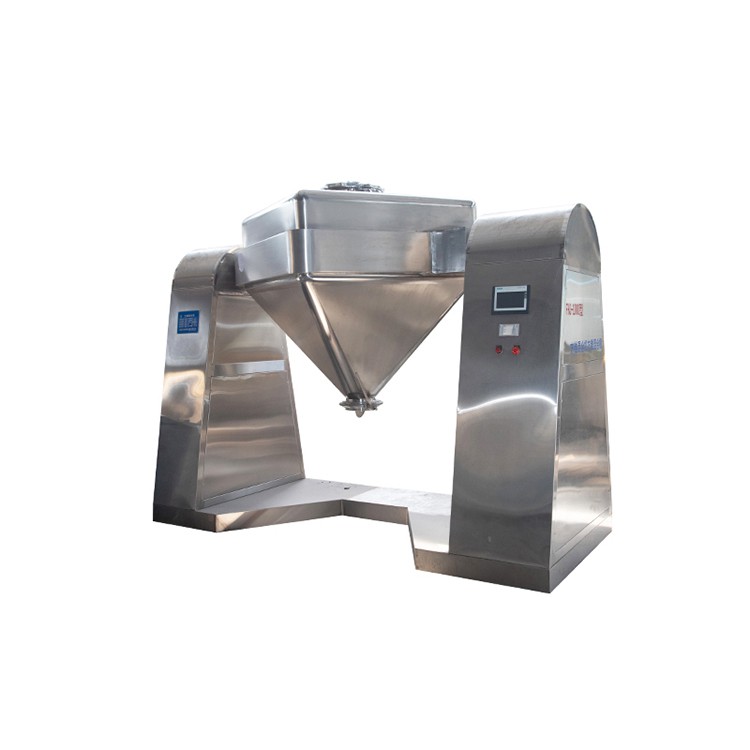
Now, let's talk about how the Vacuum Feeder Machine integrates with other equipment in your production line. Many industries use mixing equipment along with the feeder. For instance, a Square Cone Mixer can be used to blend different materials before they are processed. The Vacuum Feeder Machine can be connected to the mixer in a way that it feeds the materials in the right proportions and at a uniform rate. This ensures that the mixing process is efficient and the final product has a consistent quality.
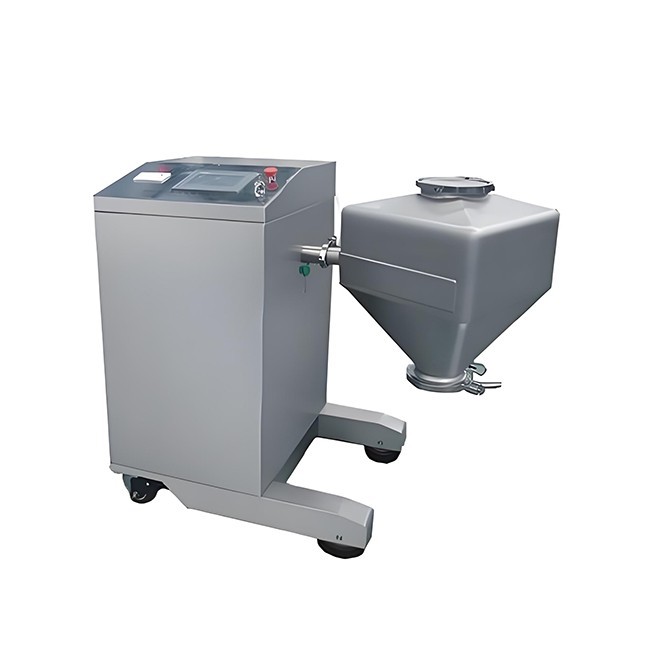
Similarly, a V Type Blender is another popular mixing device. The feeder can be set up to feed the materials into the blender evenly, which is essential for achieving a homogeneous mixture. And if you're working on a small - scale production or conducting research in a laboratory, a Laboratory Hopper Mixer can be paired with the Vacuum Feeder Machine. The feeder can provide a steady and uniform supply of materials to the mixer, making your experiments more accurate and reproducible.
In addition to these, the feeder can also be synchronized with other machines in the production line, such as a granulator or a tablet press. By ensuring uniform feeding, it helps these machines to operate more smoothly and produce high - quality products.
Maintenance is also crucial for ensuring uniform feeding. Regular cleaning of the feeder, especially the suction nozzle and the conveying system, is necessary to prevent the buildup of material. A clogged nozzle or a blocked conveying line can disrupt the uniform flow of material. Lubrication of moving parts, such as the screw conveyor or the motor, also helps in maintaining the smooth operation of the feeder.
Moreover, periodic calibration of the sensors and control systems is essential. This ensures that the feeder is accurately measuring the flow rate, pressure, and other parameters, and can make the necessary adjustments to maintain uniform feeding.
As a supplier of Vacuum Feeder Machines, I've seen firsthand how these machines can improve the efficiency and quality of production processes. They offer a reliable and cost - effective solution for uniform material feeding. Whether you're in a large - scale manufacturing plant or a small laboratory, a Vacuum Feeder Machine can make a significant difference in your production line.
If you're interested in learning more about how a Vacuum Feeder Machine can benefit your business or if you're looking to purchase one, don't hesitate to get in touch. We can discuss your specific requirements and find the best solution for you. Whether you need a simple feeder for a small - scale operation or a complex system for a large - scale production line, we've got you covered.
In conclusion, a Vacuum Feeder Machine ensures uniform feeding through a combination of advanced vacuum technology, well - designed components, accurate flow control, and effective integration with other equipment. By understanding these principles, you can make the most of this technology and improve the quality and efficiency of your production processes. So, if you're in the market for a reliable feeding solution, give us a shout and let's start the conversation.
References:
- Industrial Feeding and Conveying Handbook
- Vacuum Technology Principles and Applications